
Bad Breath & Halitosis Treatment in Brampton
Persistent Bad Breath? A Dental Check-Up Can Help Find the Cause

Bad breath—medically known as halitosis—can be embarrassing, frustrating and difficult to manage with mints or mouthwash alone.
If bad breath keeps returning despite brushing, flossing or using mouthwash, there may be an underlying oral-health reason.
At Polaris Dental in Brampton, we can examine your teeth, gums and mouth for potential dental causes of persistent bad breath and recommend treatment based on what we find.
For many patients, the first steps may be surprisingly straightforward: a dental examination, professional teeth cleaning, improved gum care and better tongue hygiene.
Why Does My Breath Smell Even After Brushing?
Most persistent halitosis originates in the mouth rather than the stomach.
A systematic review reported that approximately 80–90% of halitosis is associated with intra-oral factors, with tongue coating, periodontal disease and poor oral hygiene among the principal causes.
Common dental and oral contributors include:
- Plaque and bacterial buildup
- Coated tongue
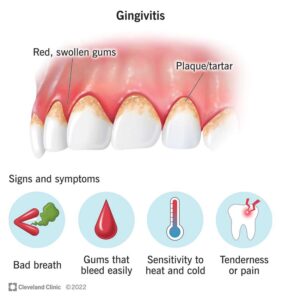
- Gingivitis
- Gum disease (periodontitis)
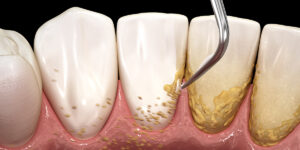
- Calculus or tartar buildup
- Food trapped between teeth
- Cavities
- Poorly fitting or difficult-to-clean dental restorations or appliances
- Dry mouth
- Inadequate brushing, flossing or tongue cleaning
Bacteria within oral biofilm can produce volatile sulfur compounds (VSCs), which are major contributors to oral malodor. The ADA specifically identifies oral biofilms, particularly those on the tongue and in periodontal areas, as important sources of these compounds.
Bad Breath and Your Tongue
Your teeth aren’t the only place that needs cleaning.
The surface of the tongue can accumulate bacteria, food debris and shed cells, creating what is commonly called tongue coating.
A 2025 review describes tongue coating as a microbial biofilm and identifies it as an important bacterial reservoir associated with both halitosis and periodontal disease.
That is why brushing your teeth repeatedly may not completely solve bad breath if significant tongue coating remains.
Depending on your examination, we may recommend incorporating appropriate tongue cleaning into your daily oral-hygiene routine.
Can a Dental Cleaning Help Bad Breath?
Yes—when plaque, calculus, gingivitis or periodontal problems are contributing to the odor, professional dental care can be an important part of treatment.
A professional cleaning can remove plaque and hardened calculus from areas that are difficult or impossible to adequately clean with a toothbrush alone.
The ADA notes that professional cleaning can reduce oral malodor, and periodontal therapy involves professional removal of plaque/biofilm and calculus along with effective daily plaque control.
However, cleaning isn’t automatically the answer for every patient with bad breath.
The important first step is determining why the bad breath is occurring.
What Happens at a Bad Breath Dental Check?
At Polaris Dental, we don’t simply recommend covering the smell with mints.
Depending on your individual situation, your dentist may evaluate your:
Teeth: We can check for cavities, food traps, defective restorations and other dental problems.
Gums: Bleeding, inflammation, periodontal pockets and calculus may indicate gingivitis or periodontal disease.
Tongue: We can assess whether significant tongue coating may be contributing.
Oral hygiene: Areas that are being missed during brushing or flossing can be identified.
Dry mouth: Reduced saliva can contribute to oral odor and may require further investigation.
If we identify a dental cause, we can discuss the appropriate treatment.
Bad Breath Can Be a Sign of Gum Disease
Persistent bad breath should not always be dismissed as a cosmetic issue.
A 2024 systematic review and meta-analysis found a positive association between halitosis and periodontitis. Depending on the method used to assess halitosis, people with periodontitis had approximately four times the odds of halitosis in the included observational studies. The researchers cautioned that there was significant heterogeneity, so the results should not be interpreted as proving that periodontitis causes every case of bad breath.
Possible warning signs of gum disease include persistent bad breath, bleeding gums, swollen or tender gums, gum recession, calculus buildup and loose teeth.
If gum disease is contributing to your bad breath, simply using stronger mouthwash doesn’t address the underlying periodontal problem.
How to Get Rid of Bad Breath

The right remedy depends on the cause.
For oral causes of halitosis, your dentist may recommend a combination of:
1. Professional dental cleaning
Removing accumulated plaque and calculus may improve oral hygiene and reduce an important source of odor-producing bacteria.
2. Treating gum disease
Patients with periodontal disease may require treatment beyond a routine cleaning, such as scaling and root planing when clinically indicated. ADA guidance identifies scaling and root planing as the treatment of choice for periodontitis in appropriate patients.
3. Cleaning your tongue
Daily tongue cleaning may help reduce tongue coating and odor-producing bacteria.
4. Brushing and flossing properly
Cleaning between the teeth is important because a toothbrush cannot adequately clean every interproximal surface.
5. Treating cavities and other dental problems
If decay, food traps or other dental conditions are contributing, your dentist can discuss appropriate treatment.
6. Managing dry mouth
Hydration and addressing the underlying cause of dry mouth may be important when reduced saliva contributes to the problem.
7. Mouthwash when appropriate
Mouthwash can be useful, but not every mouthwash works the same way. The ADA notes that cosmetic rinses may temporarily mask bad breath without acting on the bacteria or volatile sulfur compounds responsible for the odor. Some therapeutic mouthrinses contain antimicrobial or odor-neutralizing ingredients.
What Does the Latest Research Say About Bad Breath?
Research continues to support treating the source of oral malodor rather than simply masking it.
A recent randomized controlled trial found that tongue brushing and an oral probiotic both reduced measures of halitosis, with the combined intervention producing the greatest and more sustained improvement in that study.
A 2025 systematic review and meta-analysis of 10 studies also found that probiotics were associated with a reduction in volatile sulfur compounds compared with controls.
However, probiotics should not be presented as a replacement for diagnosing cavities, periodontal disease, tongue coating or other causes. A newer umbrella review found potentially beneficial effects on halitosis but emphasized variability between probiotic strains and studies and limitations in the quality and consistency of the evidence.
For that reason, a dental examination remains a sensible starting point for persistent unexplained bad breath.
Bad Breath Isn’t Always a Dental Problem
Although most halitosis is associated with oral factors, not every case originates in the mouth. Extra-oral causes can occur.
If your dental examination does not reveal an adequate explanation for persistent bad breath, your dentist may recommend discussing the problem with your physician or another appropriate healthcare provider.
When Should I See a Dentist for Bad Breath?
Consider booking a dental examination if:
- Your bad breath is persistent or keeps returning
- Other people frequently notice your breath
- Mouthwash only helps temporarily
- Your gums bleed when brushing or flossing
- You have significant tartar buildup
- Your tongue is persistently coated
- You have not had a dental cleaning recently
- You have tooth pain, sensitivity or suspected cavities
- You have dry mouth
- You’re worried that bad breath could indicate a dental problem
Bad Breath Dentist in Brampton
If you’re searching for bad breath treatment in Brampton, you don’t have to rely indefinitely on gum, mints or mouthwash.
At Polaris Dental, we can examine your teeth, gums and oral tissues, look for possible causes of halitosis, and recommend appropriate treatment.
Depending on the findings, treatment may include professional dental cleaning, periodontal care, treatment of dental disease and personalized home-care recommendations.
Book a Dental Check-Up for Persistent Bad Breath
Bad breath may be your mouth’s way of telling you that something needs attention.
Book an appointment with Polaris Dental in Brampton for a dental examination and cleaning assessment.
Find the cause. Treat the cause. Feel confident about your breath again.